
On July 7, 2026, Norm AI, a pioneering artificial intelligence company that operates both a legal technology platform and an affiliated AI-native law firm, announced the completion of a $120 million Series C funding round led by Khosla Ventures. The investment, reported by TechCrunch and PR Newswire, valued the company at $1.2 billion, officially granting it unicorn status and bringing total funding to more than $260 million since the company's founding less than three years ago. For personal injury law firms, the Norm AI funding and its underlying business model represent a signal that the legal industry is rapidly converging with AI-native technology, and that the distinction between 'legal tech vendor' and 'law firm' may be dissolving as AI agents begin to perform substantive legal work under human attorney supervision.
Norm AI's business model is distinctive in the legal technology landscape. The company operates a hybrid structure that integrates AI engineering with legal practice through its affiliated firm, Norm Law, LLP. Unlike traditional law firms that utilize AI as a productivity tool for human attorneys, Norm Law employs AI agents to perform high-stakes legal work under the supervision and calibration of human attorneys. The firm operates on an outcomes-based pricing structure rather than traditional hourly billing, claiming that this model aligns its incentives directly with client goals. The platform serves institutional clients representing more than $30 trillion in assets under management, and provides a governance layer that allows enterprises to monitor compliance in real-time and supervise other AI agents operating within regulated sectors. The Series C round drew participation from a diverse group of investors, including Blackstone, Bain Capital Ventures, Craft Ventures, Coatue, Vanguard, New York Life, TIAA, Fenwick LLP, and prominent legal industry figures including Tony James (former President and COO of Blackstone) and Jeff Hammes (former Chairman of Kirkland & Ellis).
The strategic significance of the funding extends beyond the specific company. The participation of Blackstone is particularly notable because the firm serves as both an investor and a major client, having integrated Norm AI's technology into its own internal regulated workflows. This reciprocal relationship suggests that the largest institutional investors are not merely buying legal technology but are embedding AI governance into their core operations, treating AI compliance as a fiduciary responsibility rather than a procurement decision. The involvement of Fenwick LLP, a Silicon Valley law firm known for representing technology companies, and former Kirkland & Ellis Chairman Jeff Hammes, signals that the legal establishment is actively investing in the AI-native legal model rather than resisting it.
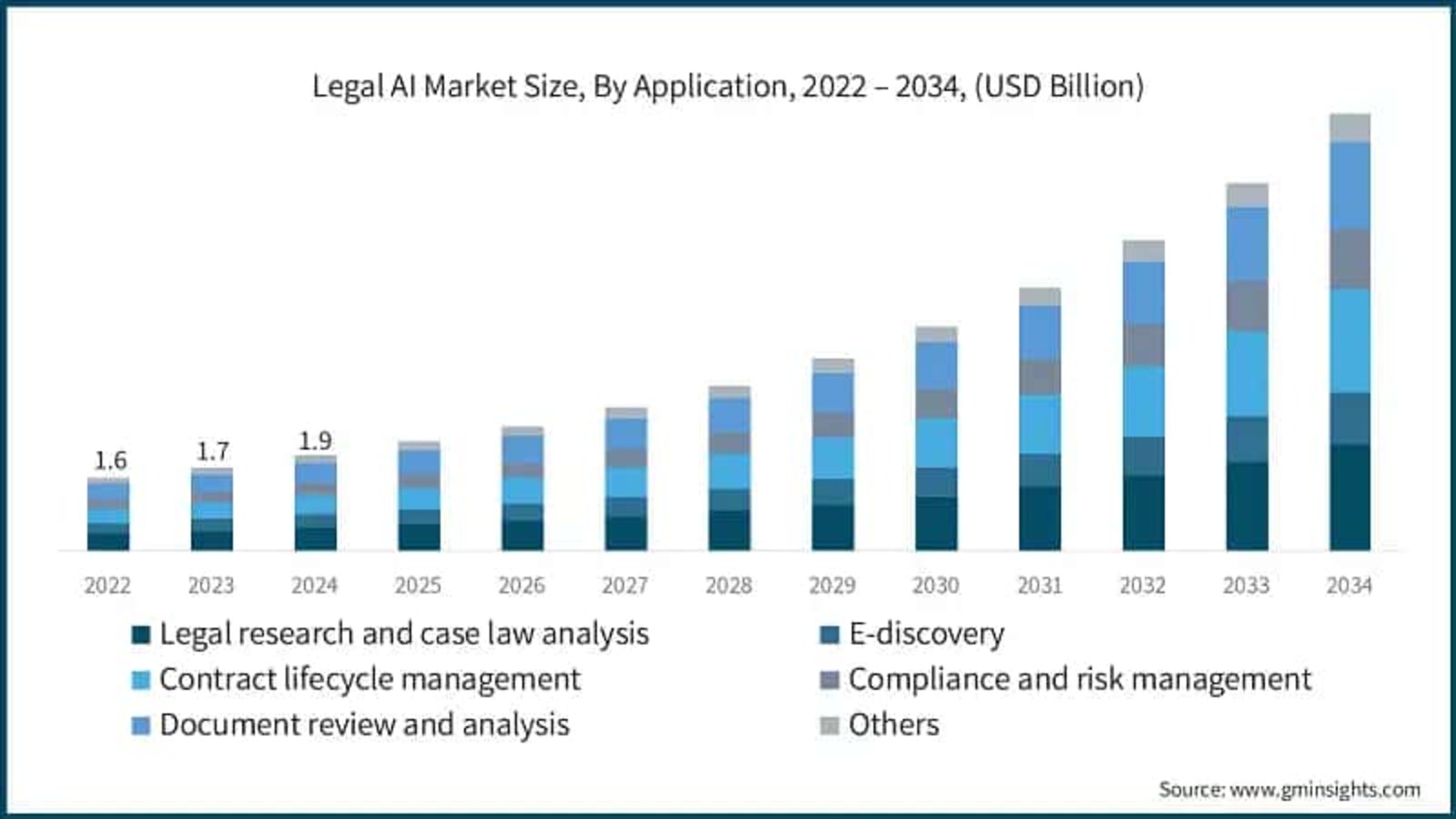
The funding arrives at a time when the legal AI market is undergoing rapid consolidation. Data from the first half of 2026 indicates that global legal tech funding reached $2.1 billion, with investors concentrating larger sums into fewer companies with clear commercial traction. Norm AI's $1.2 billion valuation places it in the same tier as Harvey ($11 billion) and Legora ($5.6 billion), though Norm AI's focus on regulatory compliance and supervisory AI agents distinguishes it from the document automation and litigation support platforms that have dominated the plaintiff-side market. The company intends to use the new capital to accelerate hiring, expand its practice area coverage, and advance its supervisory AI agents designed for regulated enterprise environments.
For personal injury law firm leadership, the Norm AI funding and platform expansion carry three practical implications. First, the hybrid AI-law firm model that Norm AI represents suggests that the most competitive legal services in the future may be delivered by technology companies that happen to employ attorneys, rather than law firms that happen to use technology, and PI firms should evaluate whether their own technology investments are positioning them as AI-first organizations or merely as traditional firms with AI add-ons. Second, the outcomes-based pricing model that Norm Law employs is a direct challenge to the billable-hour model that still dominates personal injury practice, and PI firms that operate on contingency fees should evaluate whether AI-driven efficiency gains can support more aggressive contingency fee structures while maintaining profitability. Third, the governance layer that Norm AI provides, allowing enterprises to monitor AI compliance in real-time, is a preview of the audit infrastructure that malpractice insurers and state bars will increasingly expect firms to maintain, and PI firms should begin building their own AI governance frameworks to demonstrate that their AI-assisted work is supervised, auditable, and compliant with evolving professional standards. As the legal profession enters the era of AI-native practice, the Norm AI unicorn milestone is both a benchmark and a warning: the firms that integrate AI as their core operating system will capture the capital, the talent, and the market share, while those that treat AI as a peripheral tool risk being outcompeted by technology-native competitors.