
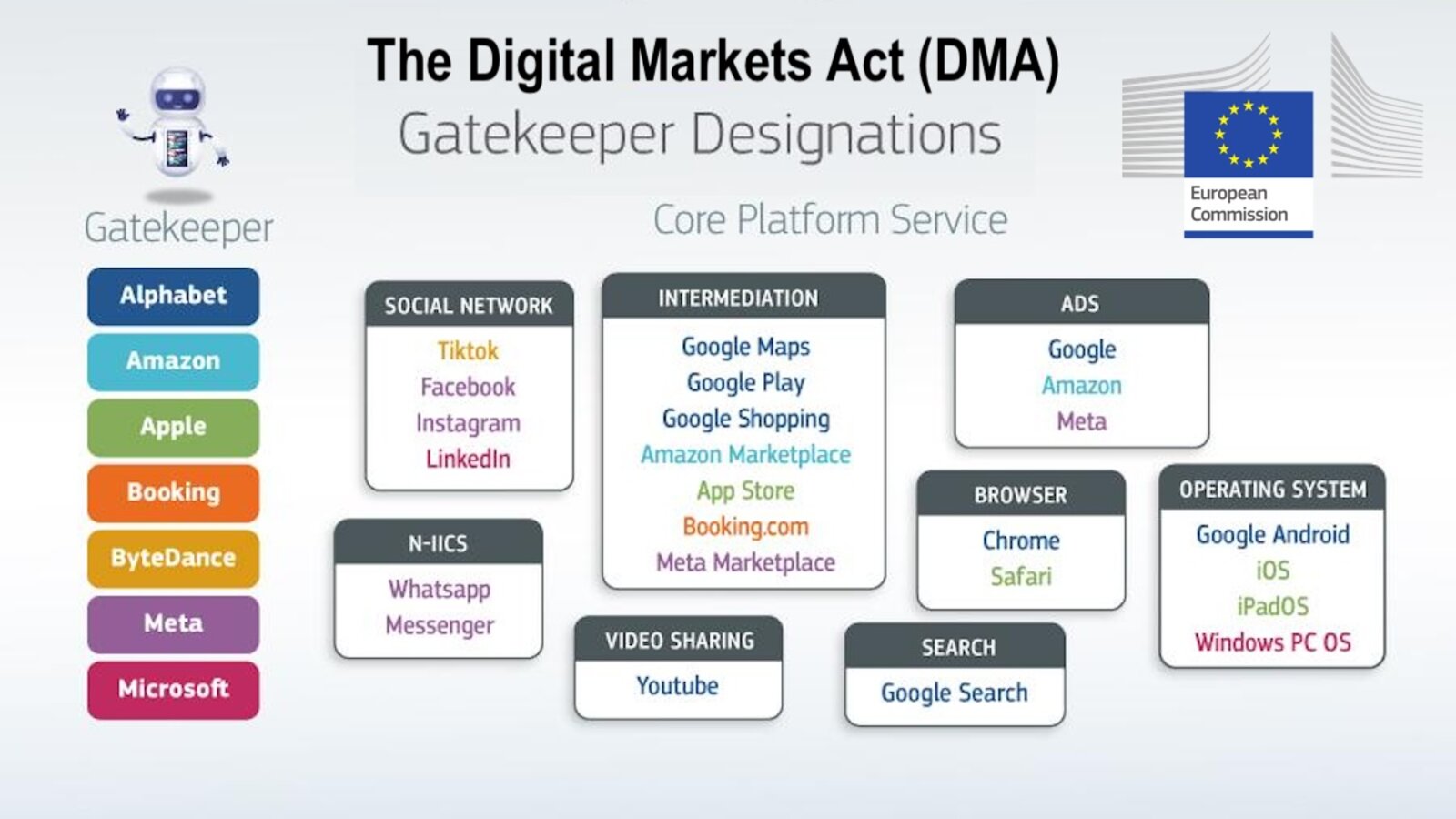
On July 16, 2026, the European Commission issued two binding decisions that will fundamentally reshape the competitive landscape for artificial intelligence assistants and search engines in the European Union. The Commission ordered Google to open 11 key features of its Android operating system to eligible third-party AI assistants, and to share anonymized search data, including ranking, query, click, and view information, with eligible search engines and AI chatbots. The decisions, reported by CNBC, Reuters, and The Verge, are the most significant regulatory interventions in the AI market to date under the Digital Markets Act (DMA), and they carry direct implications for how personal injury law firms access AI tools, how AI platforms compete for market share, and how the regulatory environment for AI is evolving beyond the EU AI Act into the realm of competition and antitrust law.
The Android interoperability decision targets what the Commission has identified as an unfair advantage for Google's Gemini AI assistant. Under the new requirements, competing AI assistants will be allowed to activate via voice commands similar to 'Hey Google,' interact with other apps to perform tasks such as booking taxis, sending messages, and providing location-based information, and access on-device hardware and contextual information more broadly. These features are expected to reach users by July 2027 through the next iteration of Android, specifically through Android 18. Support for concurrent, always-on voice activation for multiple assistants is scheduled for a later phase in Android 19, expected by August 2028. Google is permitted to verify that rivals meet specific cybersecurity and data protection criteria before granting access, and the company retains the ability to charge a fee for the data sharing, calculated based on the incremental costs of preparing and distributing the dataset.
The search data sharing decision is equally consequential. Google is now required to share anonymized search data, including ranking, query, click, and view information, with eligible search engines and AI chatbots that incorporate search functionality. The data is intended to help competitors improve their own search and retrieval systems, but the shared data cannot be used to train general-purpose AI models or to develop unrelated advertising or profiling services. Google will begin sharing this data in January 2027. The decision directly addresses the competitive moat that Google has built around its search index, which has historically been the most valuable asset in the online search market and is now a critical input for AI assistants that rely on real-time information retrieval.
Google's leadership has publicly opposed the decisions, with lawyer Kent Walker arguing that the requirements undermine critical security guardrails and disregard evidence of potential user harm. The company faces a legally binding obligation to comply, and failure to do so could result in fines of up to 10 percent of Google's total worldwide annual turnover, increasing to 20 percent for repeat infringements. The decisions represent a significant expansion of the DMA's application from traditional search and app store markets to the emerging AI assistant market, and they set a precedent for how regulators may approach AI platform dominance in other jurisdictions, including the United States.
For personal injury law firm leadership, the EU Google decisions carry three practical implications. First, the opening of Android to competing AI assistants means that PI firms will have more choices in how they integrate AI into their mobile workflows, and firms should evaluate whether emerging AI assistants offer specialized legal capabilities that Google's Gemini does not, such as HIPAA-compliant voice interaction, case-specific retrieval, or integration with legal practice management platforms. The competitive pressure on Google may also accelerate the development of Gemini's legal features, which could benefit firms that are already embedded in the Google ecosystem. Second, the search data sharing requirement could improve the quality of AI-assisted legal research by giving competing AI platforms access to the search signals that have made Google the dominant search engine, and PI firms should monitor whether legal AI platforms like CoCounsel, Harvey, or LexisNexis benefit from improved search data quality as a result of the DMA. Third, the precedent set by the EU's use of competition law to regulate AI platform dominance suggests that the regulatory toolkit for AI is expanding beyond the EU AI Act's safety and transparency framework into structural interventions that affect market access and data portability, and PI firms should be prepared for a regulatory environment in which AI platform competition is subject to the same scrutiny as traditional search and operating system markets. As the EU continues to lead the world in AI regulation, the Google DMA decisions are a critical signal that the competitive landscape for AI tools is being actively reshaped by regulators, and PI firms that understand these dynamics will be better positioned to select and negotiate with AI vendors in a rapidly evolving market.