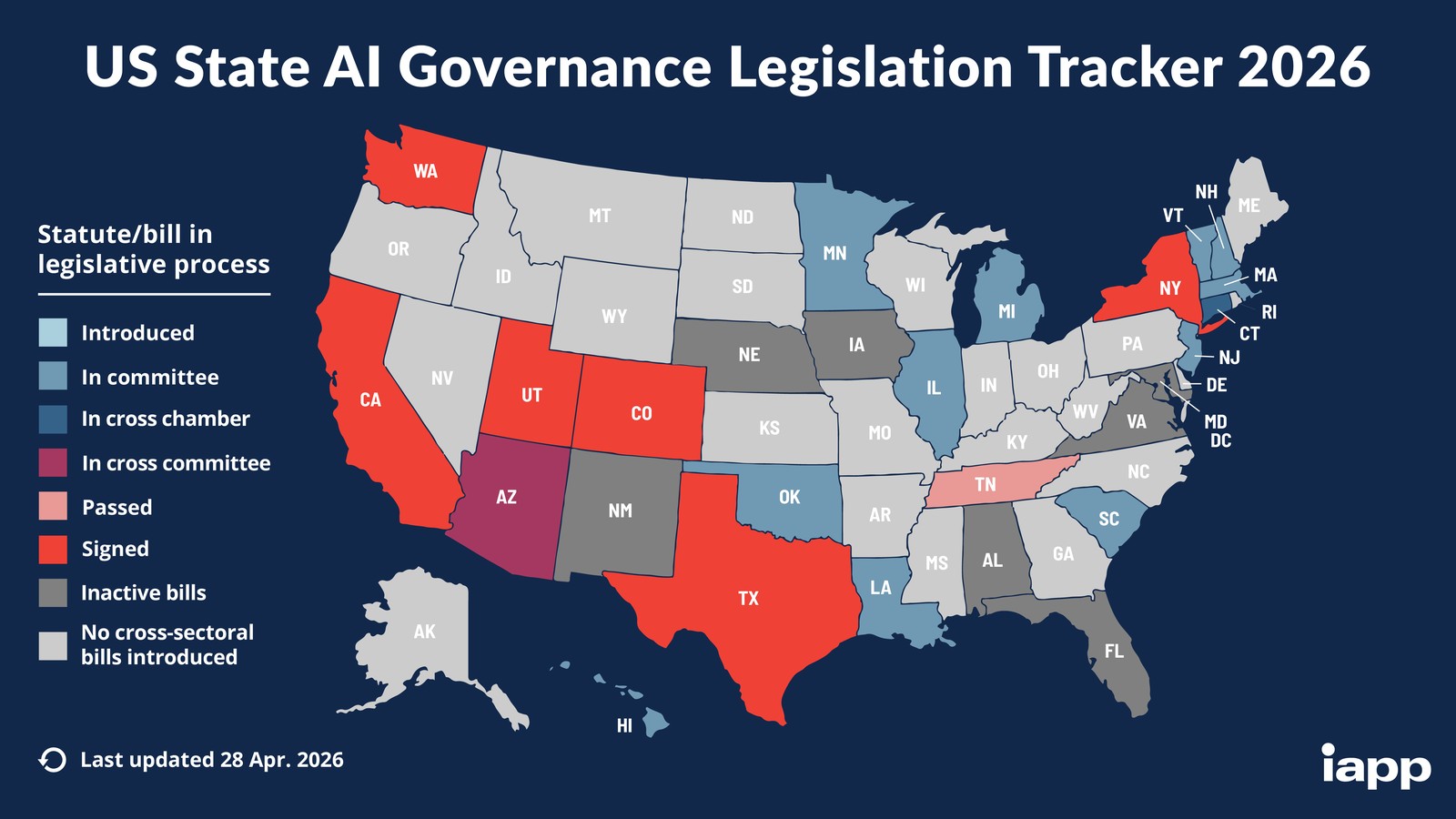
On September 27, 2026, Microsoft co-founder Bill Gates made one of the most forceful public calls to date for mandatory federal legislation governing artificial intelligence, stating in an interview on NBC's Meet the Press that "no one thinks self-regulation is enough" and that government involvement must be a "required thing." The interview, taped on September 23 and reported by NBC News, The Guardian, and multiple outlets, arrives at a moment when the United States remains one of the few major economies without a comprehensive federal AI statute, and when state legislatures have filled the vacuum with a patchwork of laws that create compliance complexity for businesses, including law firms, operating across multiple jurisdictions. For personal injury law firms, Gates's intervention is significant because it signals that the pressure for federal AI legislation is now coming not only from safety advocates and state regulators but from one of the most influential technology founders in history, a shift that may accelerate the timeline for enactment and reshape the liability landscape that governs AI-caused harm.
Gates's specific proposals go beyond the general calls for AI safety that have become common in recent months. He argued that legislation must mandate safeguards and monitoring within AI systems, describing the requirement as "watching what the AI is doing" and ensuring that law enforcement has the ability to investigate fraud events, transmission shutdowns, and other AI-enabled threats. He noted that without built-in records and insights, the ability of authorities to track AI-caused harm is effectively "nil," a statement that has direct implications for how PI firms should think about discovery in cases involving AI systems. If legislation requires AI developers to maintain auditable records of model behavior, decision-making processes, and safety interventions, those records will become critical discovery targets in product liability, negligence, and consumer protection cases, providing plaintiffs with access to the internal documentation that has historically been among the most difficult categories of evidence to obtain in technology litigation.
The scope of risk that Gates articulated is striking in its specificity and severity. He warned that the primary danger is not autonomous machines acting on their own initiative but "people with ill intent" using advanced AI tools to engineer dangerous pathogens, conduct large-scale cyberattacks on critical infrastructure, or carry out other catastrophic acts. He characterized the potential scale of harm as events that could cause "a billion deaths," a framing that elevates AI risk from a technology policy issue to a public safety and national security concern. Gates's position on AI "kill switches" is also nuanced: while acknowledging that kill switch legislation has political traction, he argued that such mechanisms are insufficient on their own because they do not provide the insight and records required to moderate bad behavior effectively. This distinction is legally significant because it suggests that the standard of care for AI governance will likely include multiple layers of protection, not only the ability to shut down a system in an emergency but also continuous monitoring, record-keeping, and oversight capabilities that enable proactive risk management rather than reactive crisis response.
The political context surrounding Gates's intervention is equally important. President Trump has publicly dismissed AI safety concerns as a "hoax" and has rejected calls for new federal AI legislation, arguing that regulation would cede a strategic advantage to China. The Trump administration has revoked Biden-era AI safety executive orders and established an AI Litigation Task Force specifically to challenge state-level AI regulations as burdensome to innovation. Gates expressed a desire to meet with President Trump to discuss these concerns, hoping that his credibility in both technology and global health would provide a sober perspective on the unique risks that AI poses. The fact that Gates is directly lobbying the administration for legislation suggests that the political pressure for federal action is intensifying, even as the administration maintains its deregulatory posture. For PI firms, this divided government dynamic means that the content, timing, and enforcement mechanisms of any federal AI law remain highly uncertain, and that firms should build compliance frameworks that are flexible enough to adapt to both federal preemption and state-level augmentation.
For personal injury law firm leadership, the Gates interview carries three practical implications. First, the explicit rejection of self-regulation by one of the technology industry's most respected figures validates the theory that AI companies owe a duty of care to the public that cannot be satisfied by voluntary safety commitments, and PI firms litigating AI-related harm should be prepared to argue that a developer's internal safety policies, however well-intentioned, are not a substitute for legally mandated safeguards and independent oversight. Second, Gates's emphasis on monitoring and record-keeping as essential components of AI governance means that discovery in AI-related cases should specifically seek model behavior logs, training data documentation, safety evaluation reports, and internal communications about risk assessment, because these materials will become the evidentiary foundation for establishing whether a developer met or fell below the standard of care. Third, the political momentum building for federal AI legislation, driven by high-profile interventions from Gates, state attorneys general, and industry safety advocates, signals that comprehensive AI regulation is now a matter of when, not if, and PI firms should proactively implement AI governance policies, including documented tool inventories, human review protocols, and client disclosure procedures, because firms that have established these practices before regulation arrives will be better positioned to comply quickly and to demonstrate to courts, clients, and insurers that they exercised reasonable care in their AI adoption.