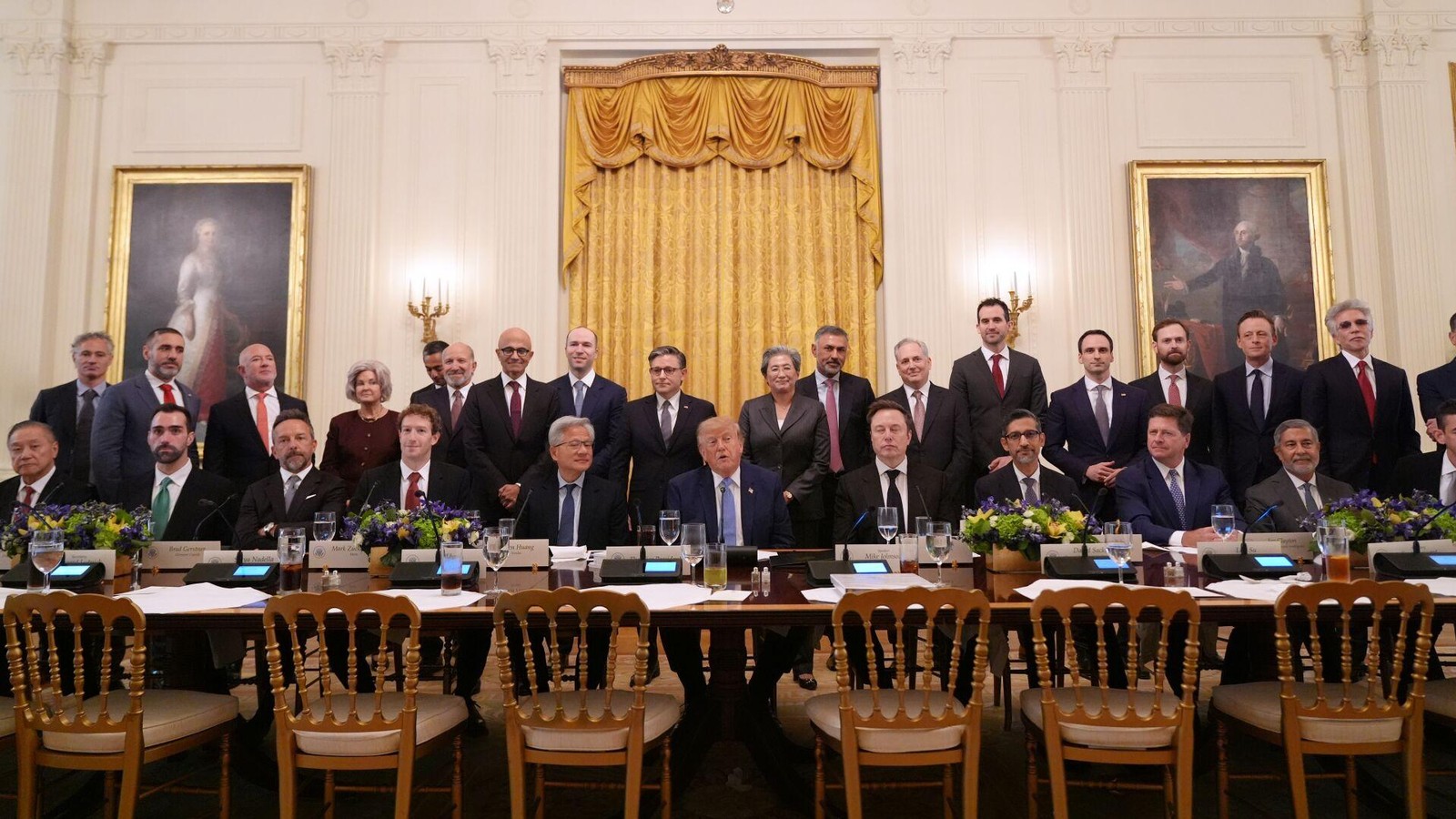
On September 29, 2026, President Donald Trump hosted nearly twenty of the most powerful figures in the technology industry at the White House for a private luncheon and summit on artificial intelligence, producing two consequential outcomes: a voluntary industry accord on AI safety governance and an executive order that will replace the term 'artificial intelligence' with 'super intelligence' across all federal government documentation. The event, first reported by NBC News, brought together a cross-section of the AI industry's leadership including Elon Musk, Mark Zuckerberg, Jensen Huang, Jeff Bezos, Sundar Pichai, Satya Nadella, Lisa Su, Alex Karp, Dario Amodei, and Greg Brockman, alongside senior administration officials including House Speaker Mike Johnson, Vice President JD Vance, and Commerce Secretary Howard Lutnick. For personal injury law firms, the summit and its outputs are significant because they signal how the federal government intends to approach AI governance for the remainder of the Trump administration, and because the voluntary, morally binding nature of the accord leaves the door open for state tort systems to continue serving as the primary accountability mechanism when AI systems cause harm.
The White House Accord on Super Intelligence, which attendees signed during the summit, is a voluntary framework that Meta CEO Mark Zuckerberg described as focusing on building robust internal controls, using external auditors and evaluators to detect technology issues, and requiring boards of directors to independently review auditors' reports. President Trump characterized the agreement as 'morally binding' rather than legally enforceable, a framing that reinforces his administration's preference for industry self-regulation over statutory mandates. House Speaker Mike Johnson used the event to argue against what he called 'hyper-regulation,' stating that existing product liability laws are sufficient to handle AI-related safety issues and that the United States should avoid a heavy-handed approach that would cause it to 'lose the race to China.' For PI firms, this rhetoric is a clear signal that federal statutory AI regulation is not imminent, and that the tort system, including negligence, products liability, and consumer protection claims, will remain the primary legal framework for seeking compensation when AI systems cause injury.
The executive order renaming artificial intelligence to 'super intelligence' is more than a symbolic gesture. By redefining the terminology that federal agencies use in procurement, research funding, regulatory guidance, and public communications, the order signals an ideological shift away from the cautionary framing of 'artificial' intelligence, with its implicit suggestion of synthetic or potentially deceptive capabilities, toward a more aspirational and competitive framing that emphasizes American technological supremacy. The practical implications for litigation are subtle but real: federal agency documents, contracts, and grant applications that previously referenced 'artificial intelligence' will now use 'super intelligence,' potentially creating interpretive questions in cases where the statutory or contractual meaning of AI-related terms is at issue. More significantly, the order reflects an administration view that AI is a strategic asset to be maximized rather than a risk to be managed, a posture that will influence how federal agencies approach enforcement, preemption, and the allocation of research funding in ways that affect the AI tools that PI firms and their clients encounter.
The America.gov launch, which preceded the summit at the Andrew W. Mellon Auditorium, adds another layer of practical significance. The new AI-powered federal portal, built by the National Design Studio led by Airbnb co-founder Joe Gebbia and utilizing Google's Gemini and xAI's Grok, is designed to serve as a 'one-stop shop' for citizens accessing federal resources. For PI firms, the deployment of AI chatbots at the federal government level raises questions about the accuracy, liability, and accessibility of government-provided information that clients may rely upon in making decisions about benefits, immigration, veterans' affairs, and regulatory compliance. If an AI-powered government portal provides incorrect information that leads a client to miss a deadline or file in the wrong venue, the question of sovereign immunity, government contractor liability, and the duty of care owed by automated government systems will become increasingly relevant to PI practice.
For personal injury law firm leadership, the Trump AI summit carries three practical implications. First, the administration's explicit rejection of federal AI regulation in favor of voluntary industry self-regulation means that PI firms should not expect comprehensive federal statutes to define the standard of care for AI development and deployment, and firms should continue to build case theories around common-law tort principles, products liability, and state consumer protection laws that do not depend on federal regulatory compliance as a threshold requirement. Second, the emphasis on existing product liability law as sufficient for AI safety, articulated by Speaker Johnson, creates an opportunity for PI firms to argue that the administration itself has acknowledged that tort law is the appropriate venue for AI accountability, and that defendants who seek to evade liability through novel theories of AI exceptionalism are running counter to the government's own stated position. Third, the deployment of AI-powered government services through America.gov means that PI firms should monitor how federal agencies use AI in client-facing applications, because errors in these systems will generate new categories of claims involving government liability, contractor negligence, and the duty to maintain accurate information when citizens are directed to rely on automated portals rather than human agency representatives. As the federal government rebrands AI as 'super intelligence' and bets on industry self-regulation, the summit is a reminder that the legal profession must be prepared to hold AI developers and deployers accountable through the tort system, because the political system has chosen not to do so through regulation.